 |
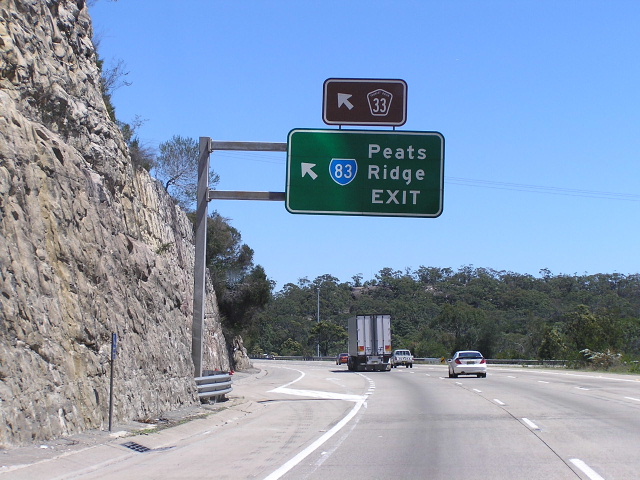
Australia - New South Wales Location: Calga, NH 1 (Sydney - Brisbane).
The actual exit sign in NSW often goes overhead, but needs not be. The brown pentagonal denotes a tourist drive. |
|
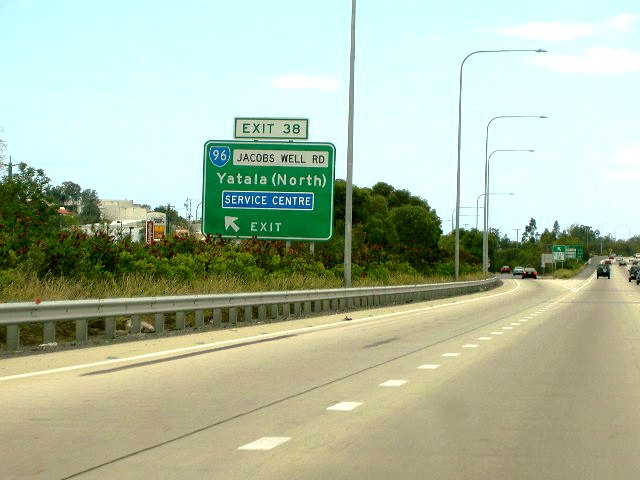
Australia - Queensland Location: Pacific Motorway (Brisbane - Sydney)
Quite the same as the (second) directions shield - this time with an arrow and the word "exit". |
 |
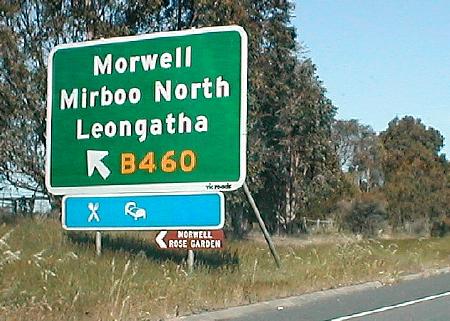 |
Australia - Victoria Location: M 1 (Princess Fwy, coastal road from Melbourne - Sydney)
Not too much of a change from the AD signs. All three signs before the exit are more or less the same. |
|
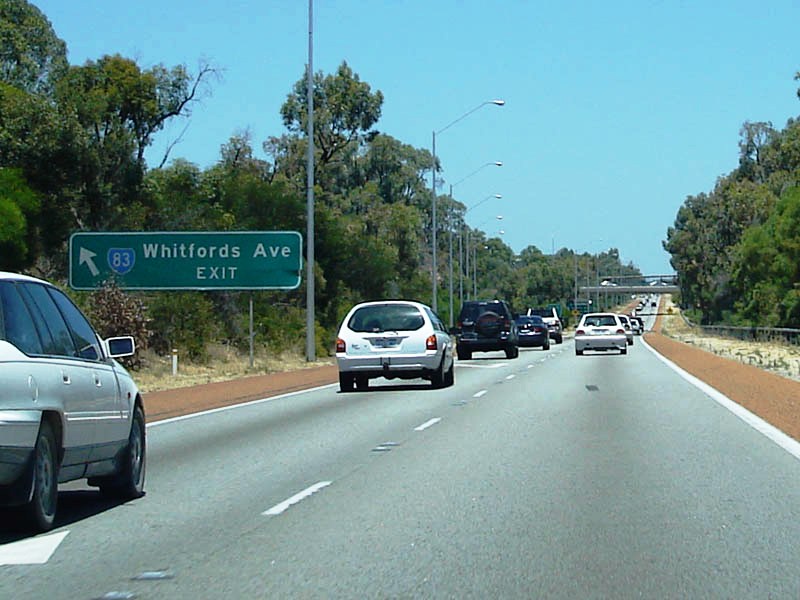
Australia - Western Australia Location: SR2 (Perth - Joondalup)
Like the AD sign, this sign only shows the name of the exit, the word "EXIT" and the road number. The blue background of the road number designates that the intersecting road is a state route. So far, Western Australia has not joined the other Australian states in converting to a system where roads are given a prefix M, A, B, or C. |
|
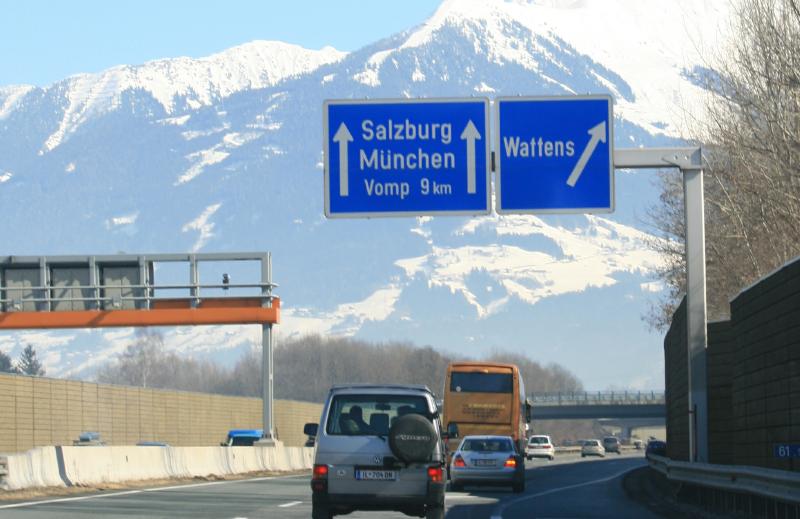 |
Austria Location: A12 (Landeck - Rosenheim). Only the major name of the exit on the sign. Where exit numbers are shown, it would be placed on top of the sign. In this case, you're shown an overhead pull-through sign as well with the control cities for the route and the name of the next exit plus the distance to the next exit. That information is not always available, though. Sometimes, you'll also see an intermediate form, where the name of the next exit and the distance thereto is placed on top of the sign showing the name of the exit. |
|
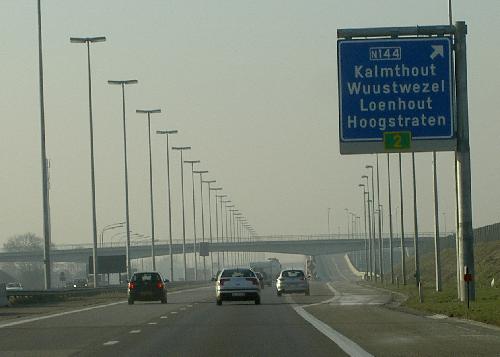
Belgium - Flanders Location: E19 (Rotterdam - Antwerpen).
Always an overhead sign at the exit in Flanders, but pull-through information is mostly absent. The green square at the bottom gives the exit number. |
 |
|
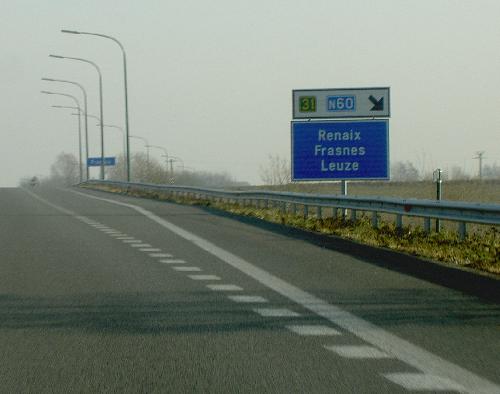
Belgium - Wallonie Location: E429 (Tournai - Brussels)
Much the same as the directions sign, with all the directions of the exit listed. Exit number and intersecting road number are on top this time. |
|
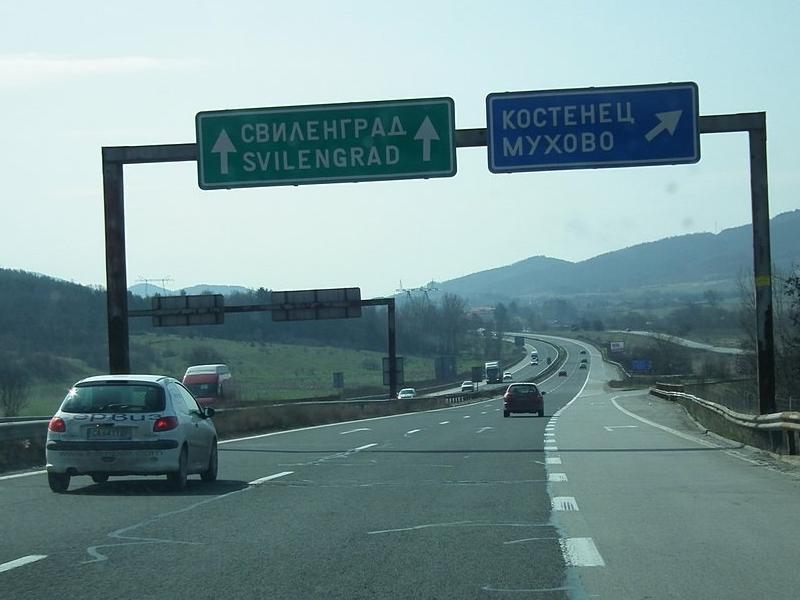
Bulgaria Location: A1 (Sofia - Svilengrad - Istanbul).
The ID sign in Bulgaria tends to come overhead, with the focal point for the road ahead on the big green sign and the exit destinations on blue. No road number though on this sign. |
 |
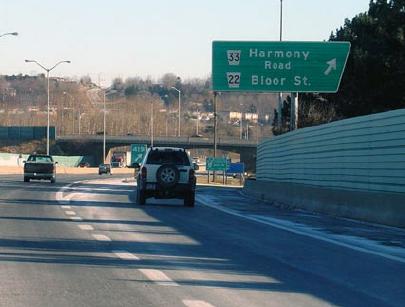 |
Canada - Ontario Location: King's Highway 401 (Windsor - Montréal).
Directions and road numbers. On this particular sign, all directions are the names of roads. This is quite common in urban areas, but just as much you get to see names of towns or areas. Note the sign with "419" in the background, indicating the exit number. |
|
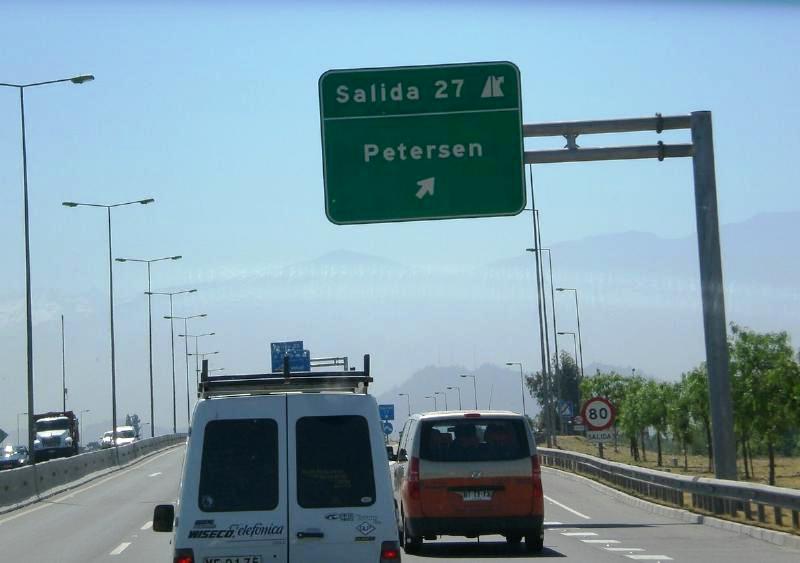
Chile Location: Costanera Norte, Santiago de Chile
Exit name and number. Unlike the AD signs, the ID sign does show that the intersecting road is a non-motorway, by using the green background. It's pretty much like in Spain, where the AD signs are in blue and only the ID sign shows what class of road the intersecting road is. Exit numbers in Chile are kilometer-based, by the way. |
 |
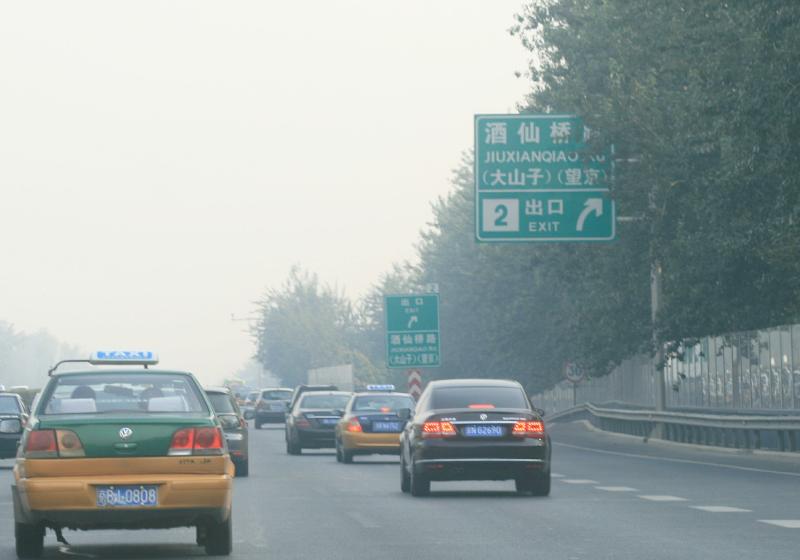 |
China Location: Beijing Airport Expressway Same information as the advanced directional signs, just the distance being replaced by an arrow. Yet that arrow is one of the more interesting features of Chinese exit signs. They show the configuration of the exit, so a tight exit gets a much tighter arrow and an exit that is more like a C/D-lane is demonstrated as such. |
|
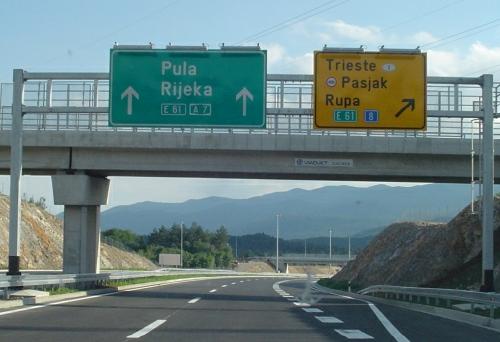
Croatia Location: A 7 (Ljubljana - Rijeka)
Most exit signs in Croatia are overhead. Same directions as the earlier signs, this time clearly showing the relevant road numbers though. |
 |
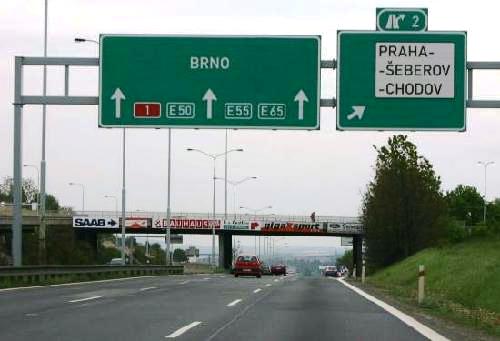 |
Czech Republic Location: D 1 (Praha - Brno).
The last sign before the exit is overhead in most cases, like it is here. In this case, the directions for the exit are both local ones, hence the white background. The pull-through sign just features the control city and the road numbers. |
|
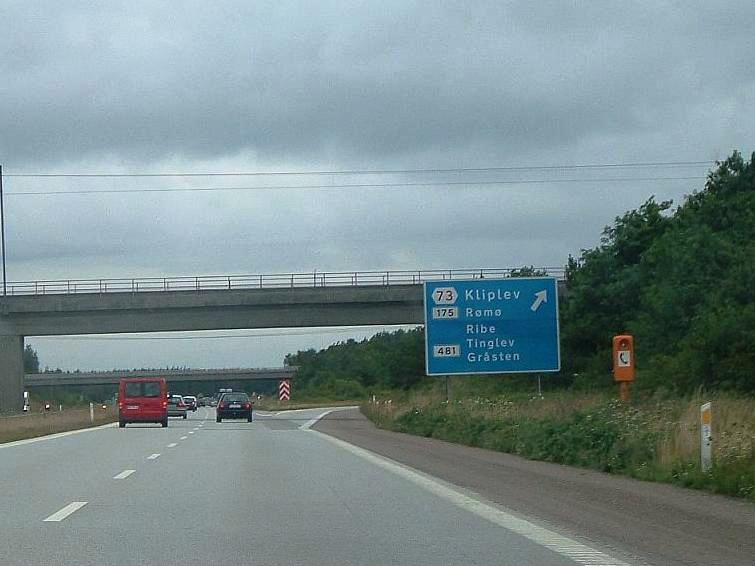
Denmark Location: E 45 (Flensburg - Arhus)
Basically, a repeat of the directions sign. The numbering shield "481" is specifically linked to the destinations "Tinglev" and "Grasten" and is therefore placed this low. |
 |
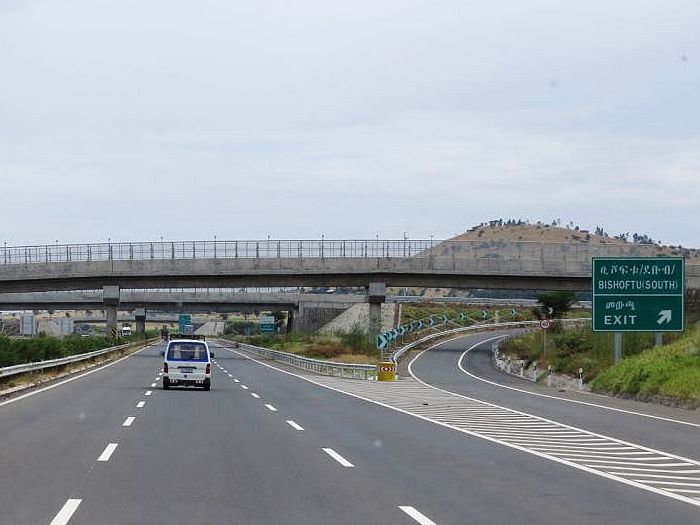 |
Ethiopia Location: Addis Abeba - Adama Expressway A repitition of the exit destinations, and all of course in Ethiopian and Roman characters. The position of this ID sign is typical for Ethiopian motorways, but relatively late in comparison. Photo: Vatse |
|
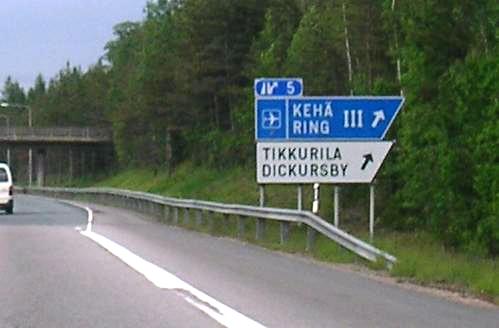
Finland Location: E 75 (Helsinki - Lahti)
All directions of the exit, seperated by colour code. The exit number is on top this time. The askew right-hand side at these last signs before the exit is an interesting common feature of the Nordic countries. Denmark, Sweden and Norway all use them. |
 |
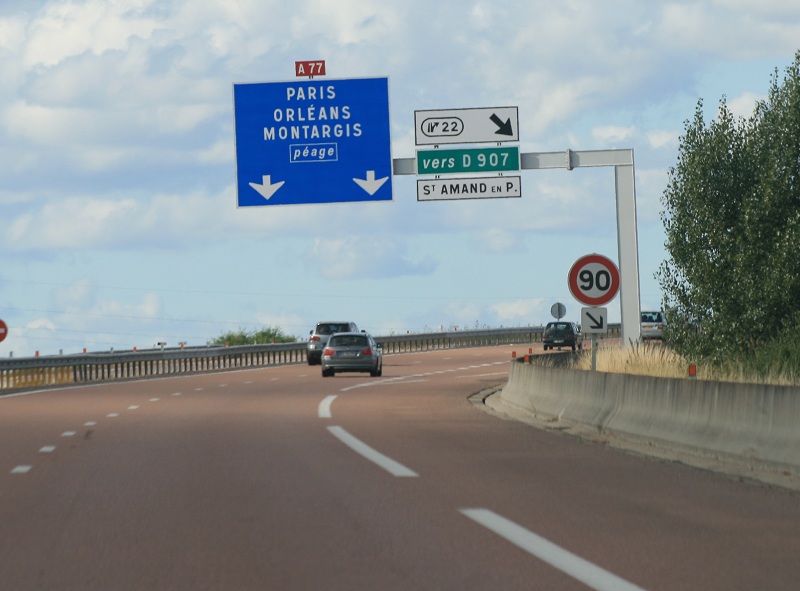 |
France Location: A77 (Paris - Nevers) Exit signs are always overhead. The exit sign is pretty much a repeat of the AD signs and the pull-through sign comes next to it. France's pull-through signs tend to be rather full; four of five destinations are not an exception. The 'péage' (toll) is used on a one-off basis on this particular sign. This type of warning is common at the last free exit before entering the toll section, as you do here. |
|
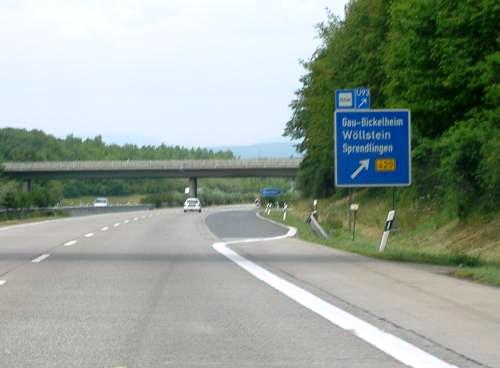
Germany Location: A61 (Ludwigshafen - Venlo). Between the German provinces, there are slight differences in the lay-out and positioning of this exit sign. This sign is in Rheinland-Pfalz, where exit signs usually are positioned next to the road, with the arrow being placed below the directions. Other provinces place the arrow next to the directions, with the sign being placed overhead instead of next to the road. The sign on the top left denotes that there is a police station on this exit, while the sign adjecent thereto signposts a permanent deviation to the next exit, which could be used in the event of traffic jams or road closures. |
 |
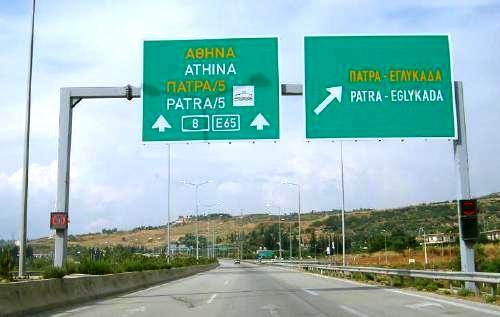 |
Greece Location: A8 (Patras - Athens)
Almost always a gantry sign in Greece, with pull through directions (including a European road number) for the road ahead, and a green exit sign. The latter is odd, because signs for non-motorways in Greece are blue in Greece. Not only in this respect, the Greek signs very much resemble German motorway signage. |
|
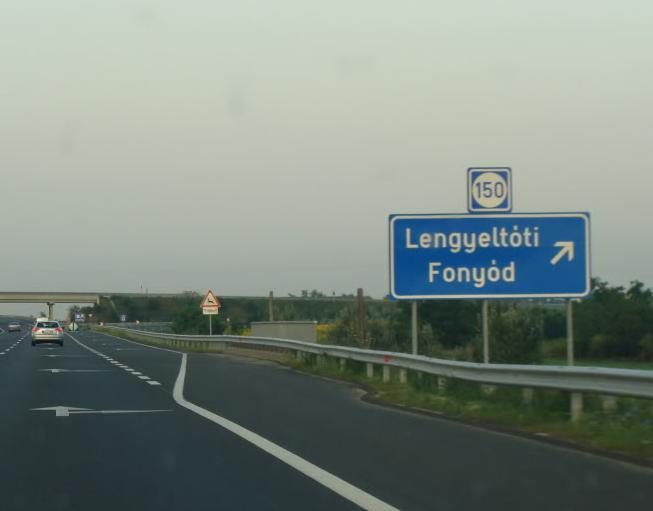
Hungary Location: M7 (Budapest - Zagreb)
The exit destinations below one another. The "150" on top is the exit number. Exits in Hungary are numbered by the nearest kilometer post. |
 |
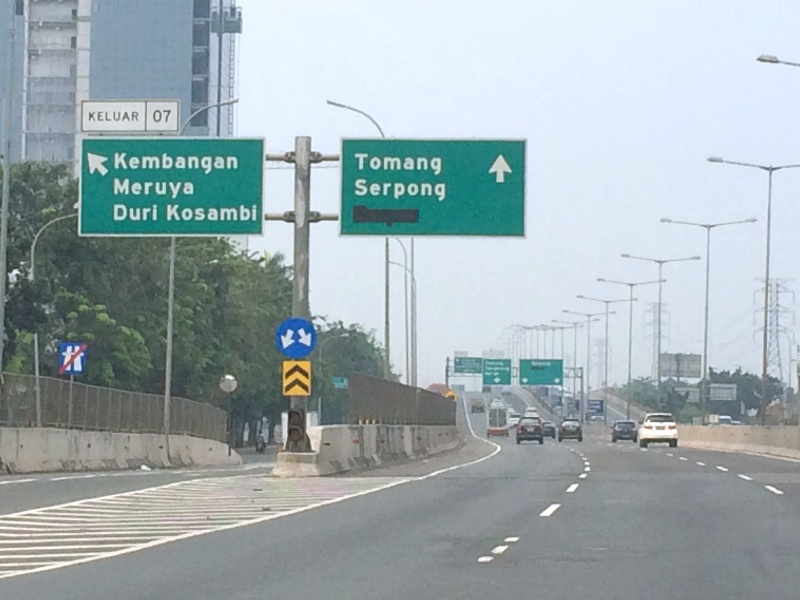 |
Indonesia Location: Jakarta Ring Road
A butterfly sign as ID, with again the destinations of the exit and major destinations ahead. The word keluar means exit. Exits in Indonesia are being signposted by the nearest kilometer post. |
|
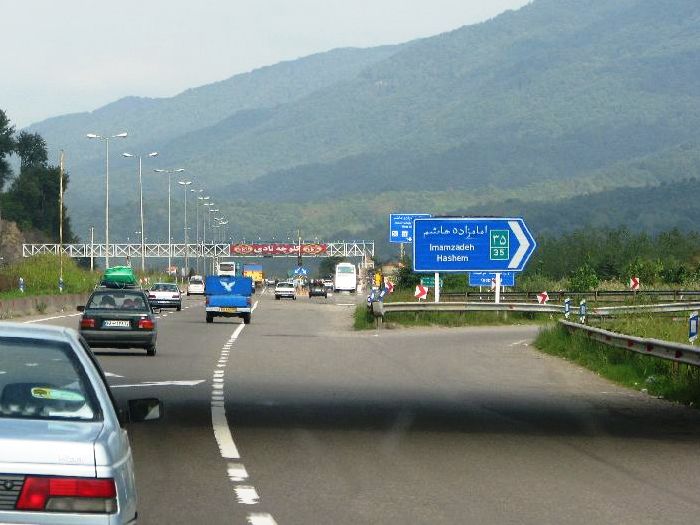
Iran Location: Motorway 1 (Tehran - Rasht)
A finger board positioned at the point where the slip road turn off. All exit destinations and the road number repeated. In urban areas you might also find an overhead sign with the same information. |
 |
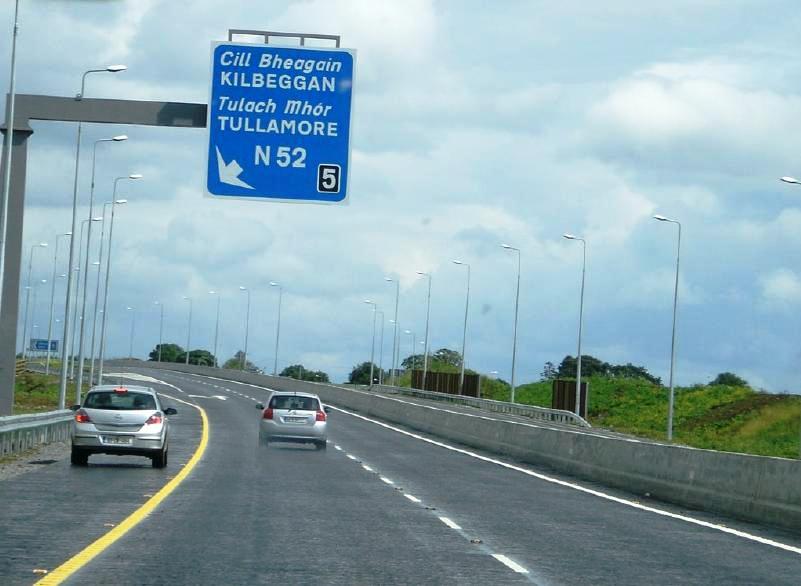 |
Ireland Location: M6 (Kilbeggan - Athlone)
Exit destinations and the exit number. All signs in Ireland are bilingual, Gaelic is printed in Italics, English in plain typefont. |
|
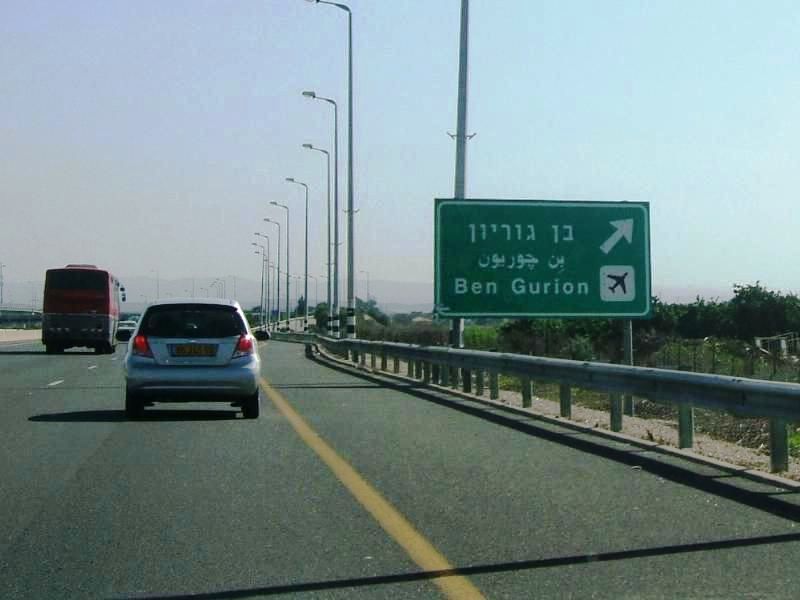
Israel Location: Hwy 1 (Tel Aviv - Jerusalem)
A repeat of the previous signs with all directions of the exit: all destinations and, where applicable, road numbers of the intersecting road. No pull-through information. |
 |
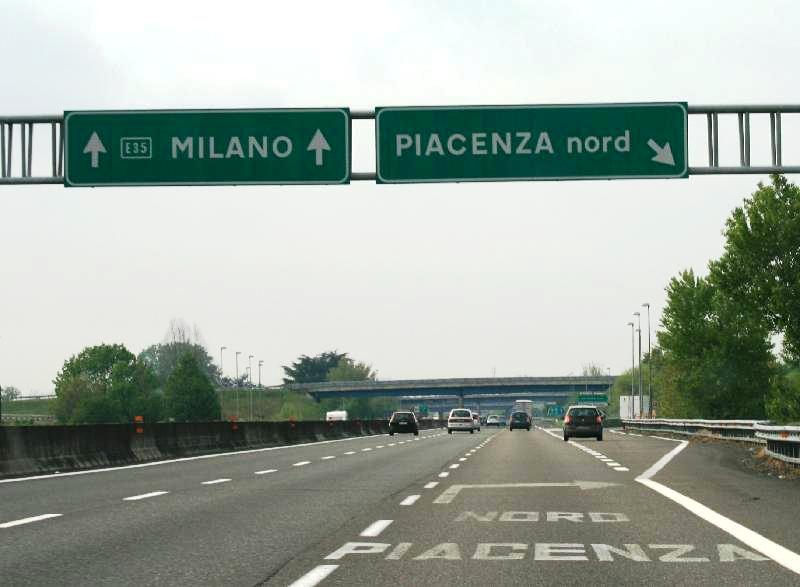 |
Italy Location: A1 (Napoli - Milano) The exit sign is always overhead and fairly straightforward: the name of the exit on the right-hand sign and the control city for the road ahead. For some strange reason, the national road number is hardly ever shown on the pull-through sign, but European road numbers are. This is odd in a way, since Italians mostly refer to A-numbers and from non-motorways, you will always be pointed to a national road number. |
|
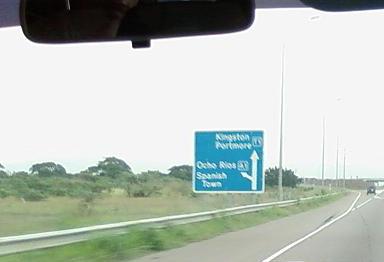
Jamaica Location: T1 (Kingston - Ocho Rios)
The directions for the exit are repeated, but this time the fork sign also contains pull-through information and the road number. |
 |
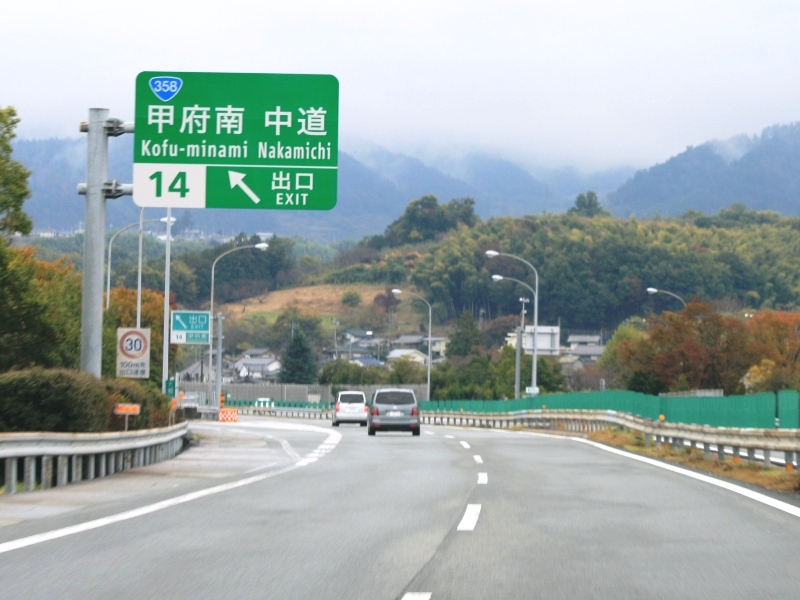 |
Japan Location: Chuo Expressway (Tokyo - Nagoya) A repitition of the sign containing all the focal points, but with an exit arrow instead of a distance. The arrow neatly points towards the exit number. Japan numbers its exits in a sequence. |
|
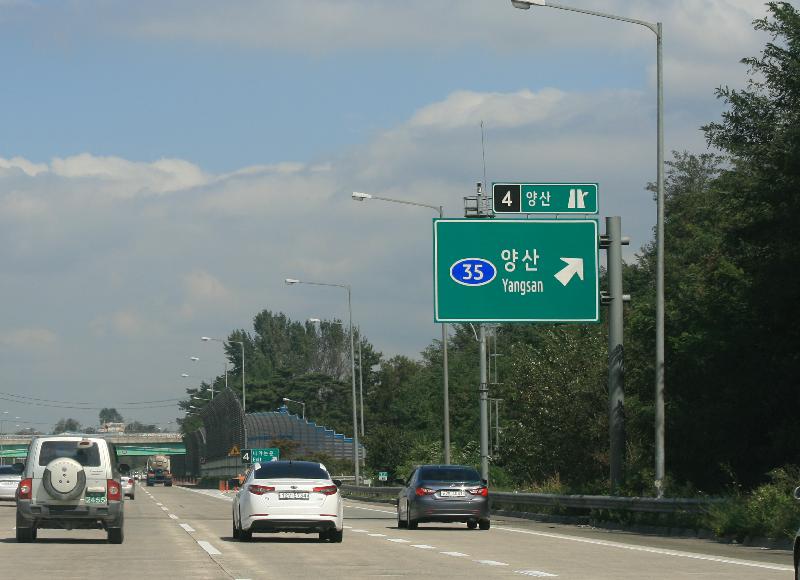
Korea Location: NH 1 (Seoul - Busan) The exit sign pretty much repeats the advanced directional signs. Route number, exit number, exit destinations. In principle, no pull-through information is provided at Korean exits. |
 |
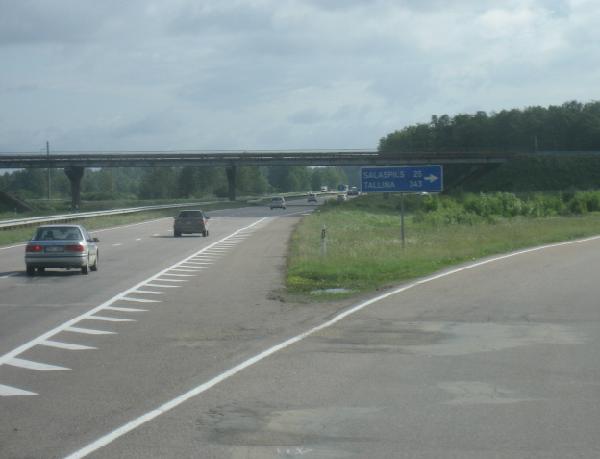 |
Latvia Location: A2 (Riga - Veclaicene)
The exit destinations and the distances to these towns. No indication that you're crossing the A1 here. And the sign itself is easy to overlook. Maybe Latvia's signs will grow together with its motorway network. |
|
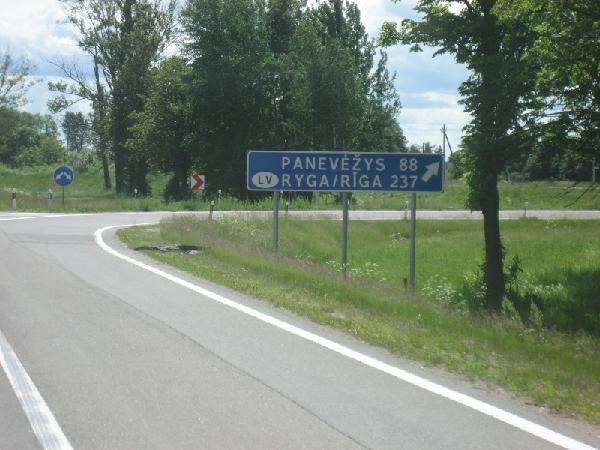
Lithuania Location: A1 (Klaipeda - Vilnius)
In a way like the Latvian sign, but at least this sign is placed at the start of the exit lane. Exit destinations, no road numbers and a neat little arrow. the LV shows that Riga is in Latvia. Something you ought to know when travelling in this area. |
 |
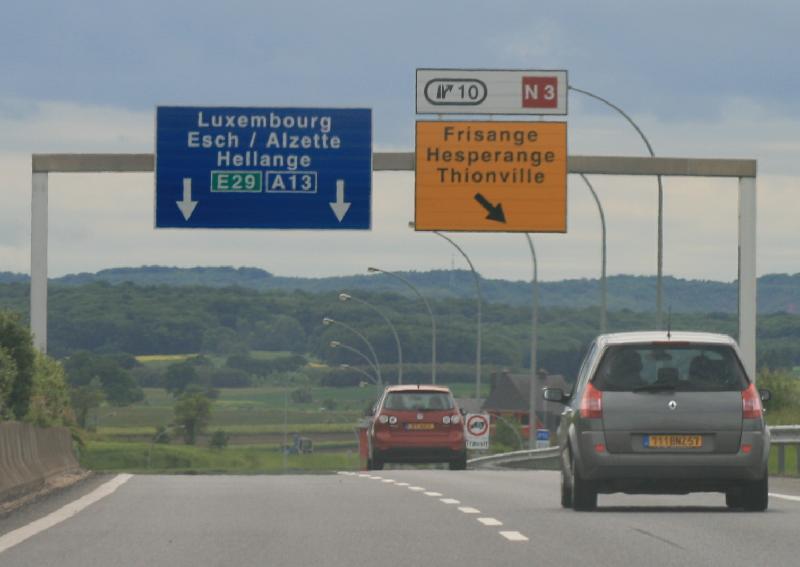 |
Luxembourg Location: A13 (Luxembourg - Brussels) The last sign before the exit is always overhead. Couple of cities ahead and all directions of the exit. |
|
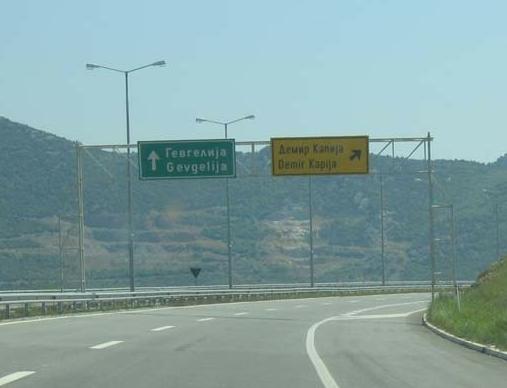
Macedonia Location: E75 (Skopje - Athens)
Control city as a pull-through sign and the name of the exit for the intersecting road. No road numbers. |
 |
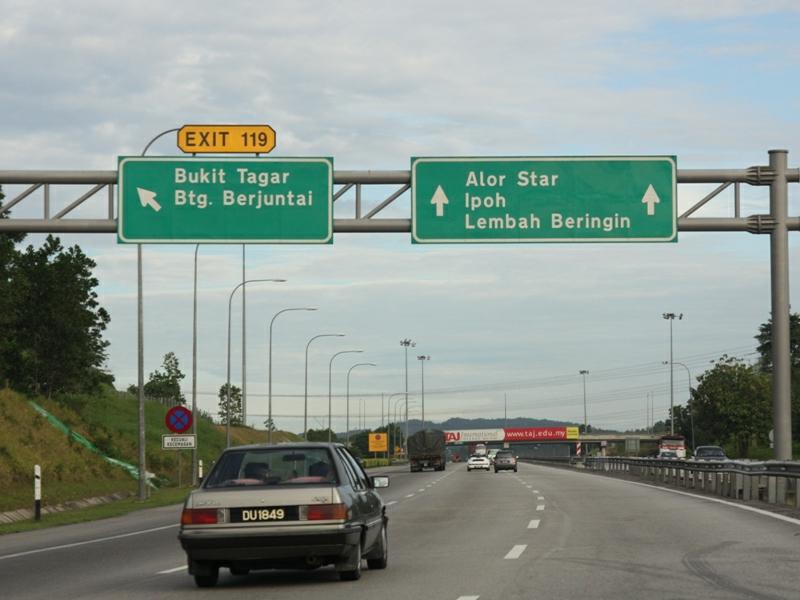 |
Malaysia Location: E1 (Kuala Lumpur - Ipoh)
Overhead sign with a few directions for the road ahead and the destinations of the exit. |
|
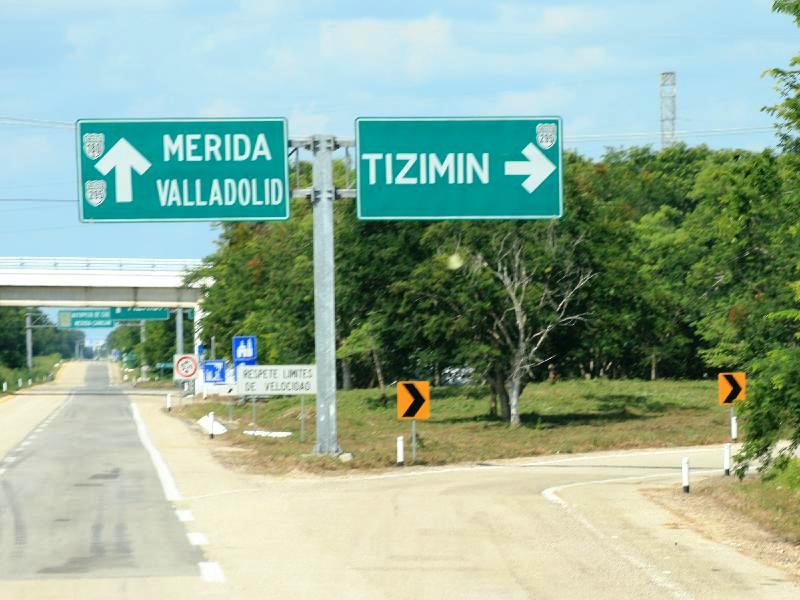
Mexico Location: MEX-180d (Cancún - Merida) Sign on an antenna on the actual intersection. Because this is a cloverleaf, you'll see only one of the destinations for which you are to turn off here. The other focal point of the cloverleaf is still ahead - you can actually see it turning off in the background. |
 |
Motorway signs
All Rights Reserved